
Blog
Stay Ahead with Smarter Home Energy Insights
Welcome to the Battery 1st blog, where we share practical insights, smart energy ideas, and clear guidance on battery storage, solar, EV charging, tariffs, and the future of home energy. Whether you're exploring your first battery system, planning future upgrades, or looking for smarter ways to cut electricity costs, our blog is here to help you make better-informed decisions. Dive into our latest posts and stay ahead in a fast-changing energy world.

Savings.
Flexibility.
Optimisation.
Expansion.
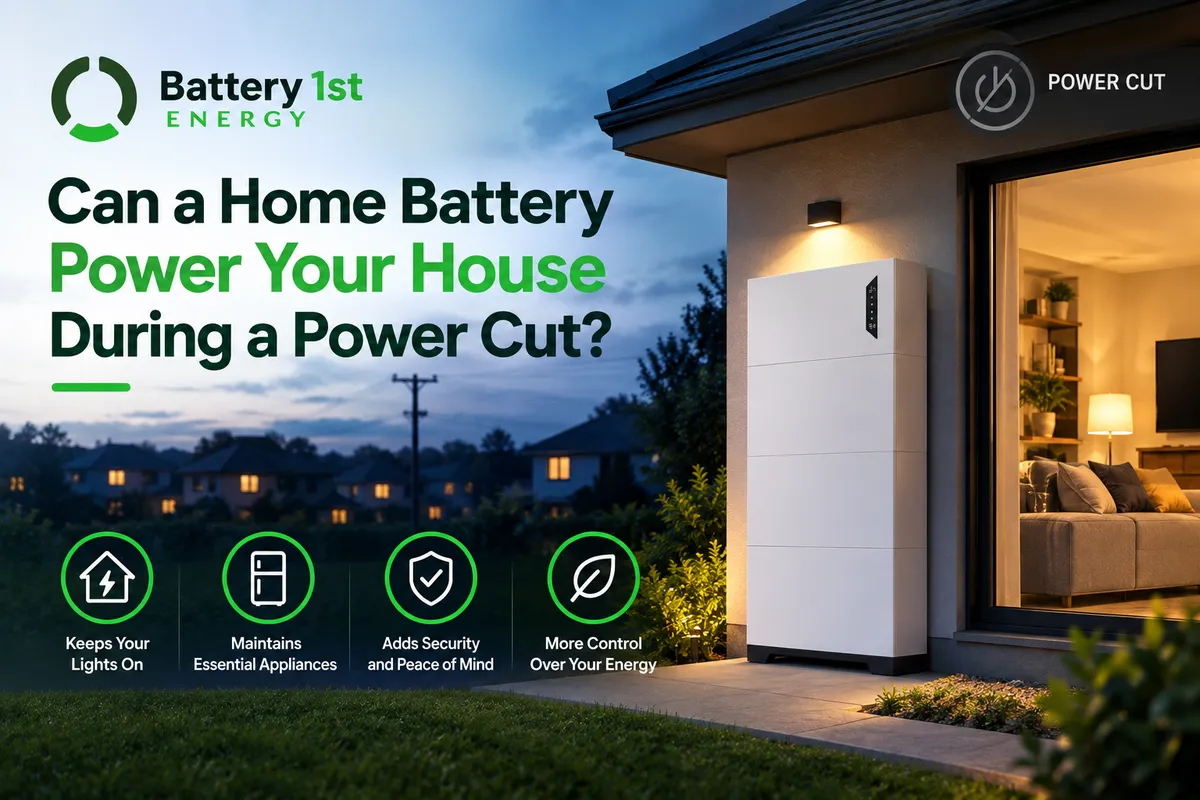
Can a Home Battery Power Your House During a Power Cut?
Can a Home Battery Power Your House During a Power Cut?
A sudden power cut can disrupt your daily routine within seconds. Lights turn off, internet connections stop, appliances shut down, and important devices may lose power. This raises an important question for many homeowners: Can a home battery power your house during a power cut?
The short answer is yes, a home battery can provide backup power during a power outage when the system is correctly installed and configured. A battery stores electricity before an outage and automatically supplies energy to your home when the grid connection is interrupted.
Modern home battery backup systems are becoming a practical alternative to traditional generators because they provide quiet, clean, and automated backup power. They can also help homeowners reduce electricity costs by storing energy when prices are lower and using it when electricity is more expensive.
Battery 1st Energy helps homeowners create smarter energy systems by installing intelligent battery solutions designed for energy savings, backup protection, and future upgrades such as solar panels, EV charging, and heat pumps.
How Does a Home Battery Work During a Power Outage?
A home battery works by storing electricity and releasing it when your home needs additional power.
The process is simple:
1. The Battery Stores Energy Before an Outage
A home battery can charge electricity from:
The electricity grid
Solar panels (if installed)
Other compatible energy sources
The stored electricity remains available until it is needed.
2. The System Detects a Power Cut
When the grid loses power, the battery system detects the interruption and switches your home to backup power.
A properly installed system uses equipment such as an inverter and transfer technology to safely disconnect from the grid and provide electricity to connected household circuits.
3. The Battery Supplies Electricity to Your Home
Once activated, the battery provides stored energy to selected appliances or, depending on system size, a larger portion of your home.
How long the battery lasts depends on:
Battery capacity
Number of appliances running
Household energy consumption
Power requirements of connected devices
What Happens When the Grid Power Goes Off?
Many homeowners imagine a blackout means every device immediately stops working. However, with a properly installed home battery backup system, the transition can happen automatically.
During a power cut:
The system detects grid failure.
The home is safely separated from the electricity network.
The battery inverter converts stored energy into usable household electricity.
Connected appliances continue operating.
This creates a more reliable energy experience compared with manually connecting portable generators.
A battery backup system does not create unlimited electricity. The available backup time depends on battery size and household energy usage.
What Can a Home Battery Run During a Power Cut?
A common question homeowners ask is:
“What appliances can my battery power during an outage?”
The answer depends on your battery capacity and installation design.
A properly sized battery can typically support essential household systems such as:
Essential Devices
Wi-Fi router
Mobile charging stations
Lighting
Security systems
Refrigerators
Freezers
Medical equipment
Small electronics
Larger Appliances
With a larger battery system, homeowners may also support:
Heating systems
Cooling systems
Washing machines
Kitchen appliances
Larger household equipment
However, high-energy appliances require careful planning because they consume more stored power.
For example, running a refrigerator and internet equipment for several hours requires significantly less energy than operating a large electric heating system continuously.
Can a Battery Power Your Entire House?
Yes, but it depends on the system size.
A whole home battery backup solution is designed to provide electricity to most or all household circuits during an outage. However, achieving full-home backup requires:
Larger battery capacity
Higher inverter output
Professional installation
Proper energy planning
Many homeowners choose a targeted backup approach by prioritizing essential circuits.
This provides longer backup duration while reducing the required battery size.
Before choosing a system, homeowners should evaluate:
Daily electricity usage
Critical appliances
Typical outage duration
Future energy needs
Battery Backup Without Solar Panels: Is It Possible?
Yes. A home battery can work without solar panels.
Many people believe battery storage is only useful with solar energy, but modern battery systems can charge directly from the electricity grid.
This means homeowners can install:
Battery storage without solar panels
and still benefit from:
Backup power during outages
Better electricity management
Lower energy costs
Future solar compatibility
A battery-first approach can be especially useful for homeowners who want immediate energy improvements but are not ready to install solar panels.
Battery 1st Energy focuses on helping homeowners start with smart battery storage and expand their energy systems when the time is right.
Benefits of a Home Battery Backup System
1. Reliable Backup Power During Outages
The biggest advantage of residential energy storage is improved protection during unexpected electricity interruptions.
A battery provides a stored energy reserve that can help keep important household functions operating.
2. Lower Electricity Bills
A smart battery does more than provide emergency power.
It can also help reduce electricity costs by:
Charging during cheaper electricity periods
Reducing expensive peak-time electricity usage
Optimizing daily energy consumption
This makes a battery system useful every day, not only during emergencies.
3. Quiet and Clean Alternative to Generators
Traditional generators often require:
Fuel storage
Regular maintenance
Noise management
Battery systems operate quietly and require less routine maintenance compared with fuel-based backup solutions.
4. Greater Energy Independence
A smart home battery system gives homeowners more control over their electricity usage.
Instead of depending entirely on the grid, homeowners have a stored energy reserve available when they need it.
5. Future Energy Flexibility
A modern battery system can support future upgrades, including:
Solar panels
Electric vehicle charging
Heat pumps
Smart home technology
This creates a future-ready energy system that can grow with your household.
How AI Makes Battery Backup Smarter
Modern battery technology is becoming more intelligent through AI-powered energy management.
An AI-enabled system can analyze:
Household electricity usage
Energy prices
Charging patterns
Battery performance
It can automatically optimize when energy is stored and when it is used.
For example:
During low-cost periods:
Battery charges automatically
During high-cost periods:
Stored energy powers your home
During outages:
Backup power is available based on your settings
This creates a smarter and more efficient energy experience.
How to Choose the Right Home Battery System
Choosing the correct battery depends on your home's specific requirements.
Consider these factors:
1. Battery Capacity
Battery capacity determines how much energy can be stored.
A larger capacity generally provides longer backup time.
2. Power Output
Capacity tells you how much energy is stored, while power output determines how many devices can operate at the same time.
3. Backup Priorities
Decide what you want to keep running during a power cut.
Some homeowners prioritize:
Refrigeration
Internet
Lighting
Security
Medical equipment
Others want more comprehensive whole-home backup.
4. Future Plans
Consider whether you may add:
Solar panels
EV charging
Additional smart devices
A flexible system can make future upgrades easier.
Conclusion: Can a Home Battery Power Your House During a Power Cut?
So, can a home battery power your house during a power cut? The answer is yes, when you choose the right battery size and installation setup.
A home battery backup system provides more than emergency electricity. It helps homeowners reduce energy costs, improve electricity management, and prepare for future technologies like solar panels and EV charging.
Battery 1st Energy helps homeowners build smarter, more flexible energy systems using advanced battery technology and intelligent optimization.
If you want to explore how a smart battery system can protect your home during outages while helping reduce electricity costs, learn more here:
https://qualify.battery1st.energy/

A better way to think about home energy
Most homeowners have been taught to think about energy in only one direction: buy from the grid and use it.
Battery First changes that.
Your home can become more active. It can buy power more intelligently. It can keep free generation for later. And in the right setup, it can sell energy back when the grid needs support.
That is a fundamentally better energy position than simply being a passive bill payer.
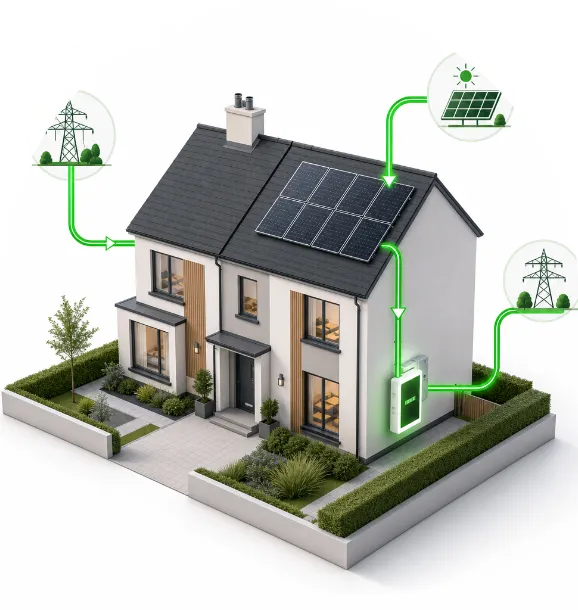

Buy electricity smarter. Store it. Use it. And when the time is right, sell it back.


Quick links
Other
© Battery 1st Energy. 2026. All Rights Reserved.