
FAQs
Straight answers for homeowners exploring battery storage, smarter energy use, and future-ready upgrades
Battery 1st is built around one simple idea: make home energy easier to understand, easier to control, and more commercially attractive over time.
This page answers the practical questions people usually ask once they already understand the bigger idea.

Savings.
Flexibility.
Optimisation.
Expansion.
Battery Basics
Is battery-only really worth it in the UK?
For many homes, yes.
A battery does not need perfect weather to create value. It can help you buy electricity at better times, store it, and use it later when prices are less attractive. That means the opportunity can come from timing, control, and smarter usage — not just from generating electricity on the roof.
What kind of home is most suitable for a battery system?
Battery storage can suit a wide range of homes, but it is often most attractive where electricity bills are high, time-of-use tariffs are available, future EV charging is likely, or the homeowner wants to build a smarter energy system in stages rather than doing everything at once.
Do I need a smart tariff to get the best results?
In many cases, yes.
A battery can still be useful in different setups, but a lot of the strongest savings opportunity comes from charging during lower-cost periods and reducing exposure to more expensive ones. The right tariff can make a major difference to the value of the system.
Can I add solar later if I do not want everything at once?
Yes.
Many homeowners prefer to start with the battery and add solar later. That can reduce upfront cost now while keeping the system open for future expansion. It also means you do not need to force every energy decision into one single purchase.
Will a battery still help if I already have solar?
Yes.
A battery can help you keep more of your own solar generation instead of only using it when it is produced or sending surplus away at the wrong time. In simple terms, it can help make solar work harder for the home.
Installation & Practicalities
Can a battery work without changing my whole house?
In many cases, yes.
A battery system does not usually mean redesigning the entire property. Suitability depends on your electrical setup, available space, and what you want the system to do, but many homes can adopt battery storage without turning it into a major building project.
How long does installation usually take?
That depends on the system and the property, but most installations are designed to be straightforward and manageable rather than highly disruptive. We would explain the likely timescale clearly before installation goes ahead.
Will installation be disruptive?
We aim to keep installation clean, organised, and respectful.
There may be some temporary disruption while equipment is fitted and commissioned, but the goal is always a professional process that feels controlled rather than chaotic.
Where is the battery usually installed?
That depends on the property and product chosen.
Common locations can include garages, utility spaces, or suitable outdoor areas. The right location depends on safety, ventilation, practicality, and how the wider system is being designed.
Can the battery power my home during a power cut?
Some systems can support backup or resilience features, but not every setup provides full-home backup as standard.
What is possible depends on the battery, inverter, installation design, and whether backup capability is included from the start.
Smart Features & Control
How much control do I have through the app?
The app is there to help you see what the system is doing, understand performance more clearly, and access smart features where available.
The exact level of control depends on the product and any optional services you choose to enable, but the aim is always clearer visibility and better decision-making.
Will the system automatically optimise itself?
Some smart features may help improve charging, discharging, and timing behaviour automatically, depending on your setup and the services enabled.
The goal is to help the system operate more intelligently, but the exact functionality depends on the equipment, feature set, and service availability.
Can I earn money by exporting electricity or supporting the grid?
Potentially, yes — where your system is eligible and relevant services are available.
Export income or grid-service rewards are not guaranteed and can depend on equipment, permissions, metering, tariffs, programme availability, and market conditions.
Do I need solar before I can access export-related opportunities?
Not always.
Some export-related opportunities depend on the type of setup and service involved, so eligibility can vary. The right answer depends on the actual system, the meter setup, and the rules of the service being used.
Future Upgrades
What happens if I want to add an EV charger later?
That is exactly the kind of future upgrade many homeowners plan for.
A good battery system can help create a stronger foundation for EV charging by making home electricity use more flexible, better timed, and easier to manage.
What happens if I want a heat pump later?
A battery can help prepare the home for a more electric future.
If a heat pump is part of the longer-term plan, battery storage can be one of the smartest early upgrades because it helps create a more coordinated energy setup before demand increases further.
Can I add other smart energy features later too?
Yes.
Depending on your goals and setup, future layers can include solar, EV charging, heat-pump readiness, hot-water optimisation, backup features, and other connected energy services. The point is to build in the right order, not to force everything into one move.
Ownership, Lifespan & Confidence
How long does a battery last?
Battery lifespan depends on the product, warranty, chemistry, usage pattern, and operating conditions.
The right way to judge this is not through vague marketing claims, but through the actual product details and warranty terms for the system being recommended.
What warranty do I get?
Most product s come with a 10 year warranty.
We would make the relevant warranty details clear before you proceed, so you understand what is covered, how long it lasts, and what support sits behind it.
What happens if I move house?
That depends on the system, your plans, and whether removal or transfer is practical.
Some homeowners install with long-term property value in mind. Others want to understand flexibility first. If moving home is something you are already thinking about, it is worth raising early so the right advice can be given.
What if I am interested but not sure this is right for me yet?
That is completely normal.
The point of the process is not to force a yes. It is to understand your home, your bill profile, your future plans, and whether a battery system actually makes commercial sense for you.
How do I know what the right next step is?
Usually, the right next step is to get clarity first.
That means understanding your current energy use, tariff opportunity, property setup, and future plans before deciding what the system should do. Once that is clear, the right recommendation becomes much easier to make.
A better way to think about home energy
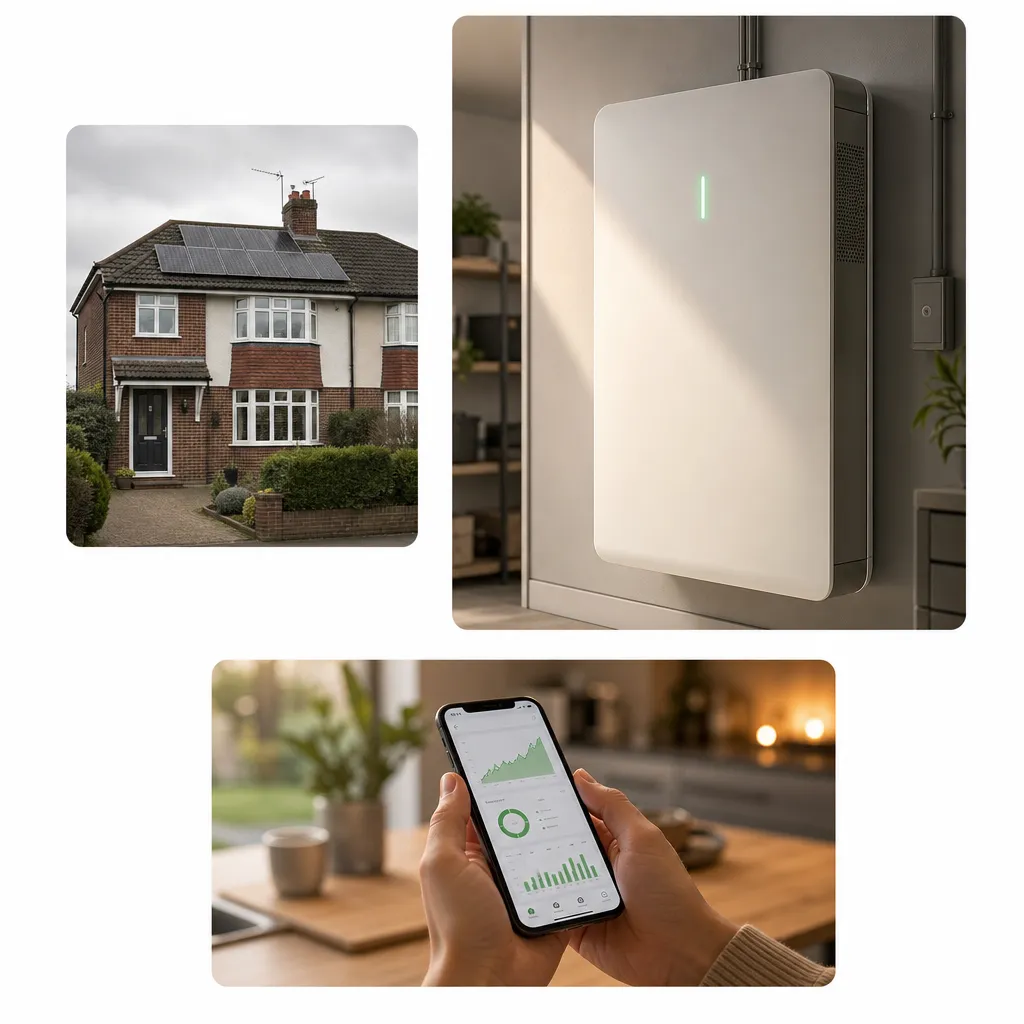
Most homeowners have been taught to think about energy in only one direction: buy from the grid and use it.
Battery First changes that.
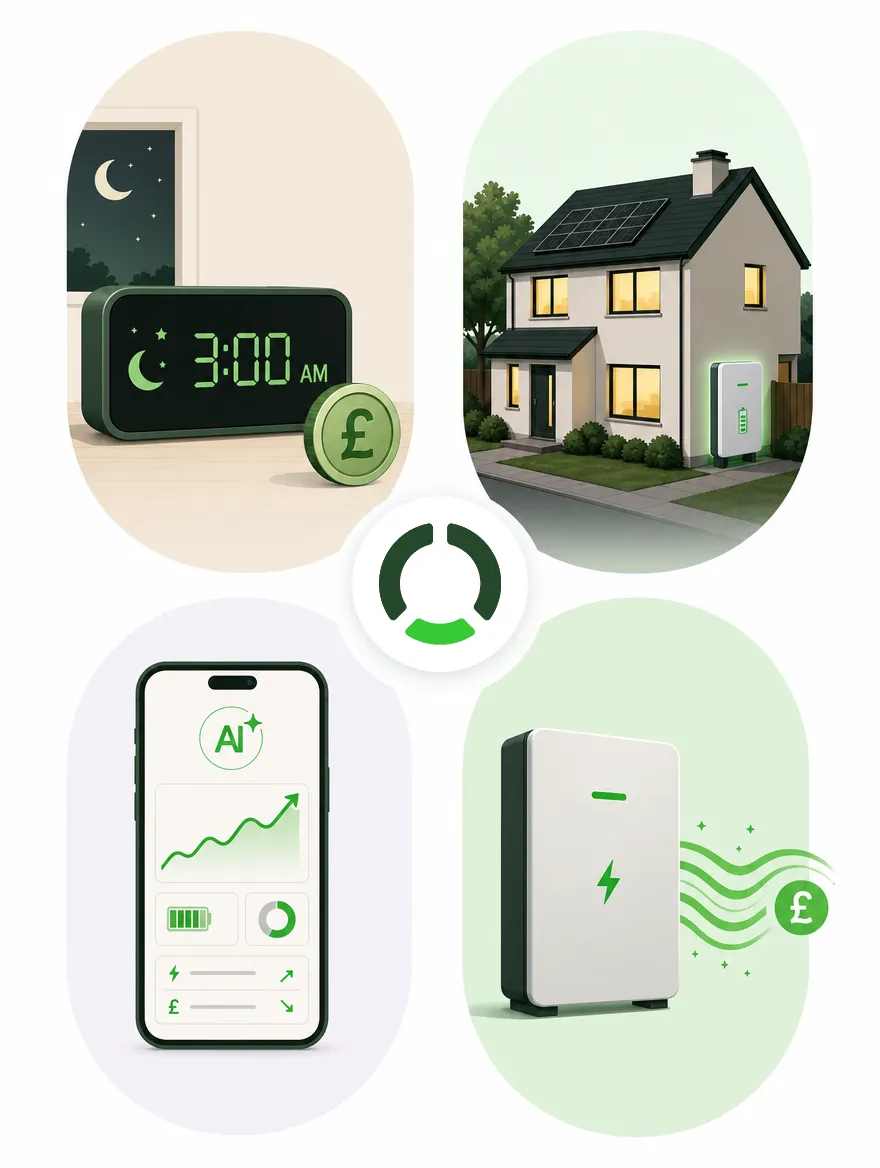
Your home can become more active. It can buy power more intelligently. It can keep free generation for later. And in the right setup, it can sell energy back when the grid needs support.
That is a fundamentally better energy position than simply being a passive bill payer.
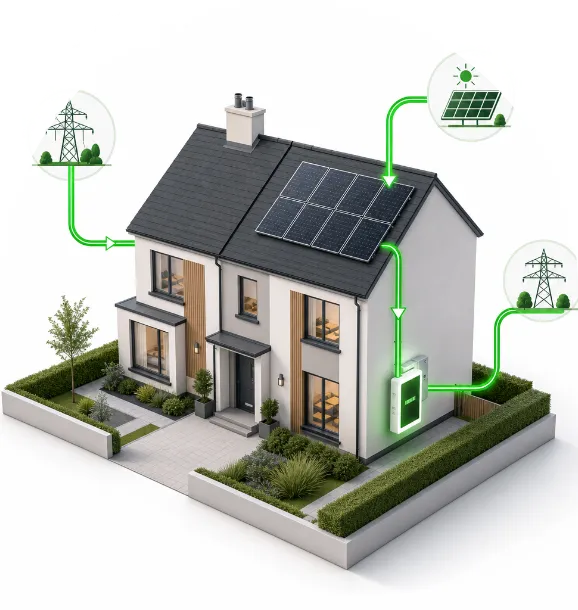

Buy electricity smarter. Store it. Use it. And when the time is right, sell it back.


Quick links
Other
© Battery 1st Energy. 2026. All Rights Reserved.