
Blog
Stay Ahead with Smarter Home Energy Insights
Welcome to the Battery 1st blog, where we share practical insights, smart energy ideas, and clear guidance on battery storage, solar, EV charging, tariffs, and the future of home energy. Whether you're exploring your first battery system, planning future upgrades, or looking for smarter ways to cut electricity costs, our blog is here to help you make better-informed decisions. Dive into our latest posts and stay ahead in a fast-changing energy world.

Savings.
Flexibility.
Optimisation.
Expansion.
Do Solar Panels Work During a Power Outage? Understanding Solar Batteries and Home Backup
Do Solar Panels Work During a Power Outage?
A power outage can quickly disrupt everyday life. Lights stop working, internet connections disappear, heating systems may shut down and essential appliances can become unavailable.
Many homeowners assume that having solar panels means their home will continue running during a blackout. After all, solar panels generate electricity from sunlight, so why would they stop working?
The answer is more complicated.
Most standard solar panel systems do not work during a power outage.
This surprises many homeowners, but it is an important safety feature built into modern solar installations. When the electricity grid goes down, most grid-connected solar systems automatically switch off.
However, there is a solution.
A properly designed battery storage system can allow your home to continue using stored energy during an outage while also helping reduce electricity costs every day.
This is why more homeowners are moving beyond solar-only thinking and considering a battery-first energy approach.
Why do solar panels stop working during a power outage?
Most homes with solar panels in the UK use a grid-connected solar system.
During normal operation:
Solar panels generate electricity
Your home uses the energy it needs
Extra electricity can be exported back to the grid
The grid supplies additional power when solar generation is low
However, when there is a power cut, the system is designed to disconnect.
The reason is safety.
During an outage, electricity network engineers may be working on damaged power lines. If homes continued sending electricity back into the grid, it could create a dangerous situation for repair workers.
For this reason, solar inverters automatically stop exporting electricity when the grid fails.
This means:
Your solar panels may still receive sunlight
They may technically be able to generate electricity
But your home cannot normally use that energy during the blackout
A standard solar installation is designed mainly for energy savings, not emergency backup.
Can solar panels work during a blackout with battery storage?
Yes.
A solar battery changes how your home manages electricity.
Instead of using electricity only when it is generated, a battery allows your home to store energy and use it when needed.
A battery system with backup capability can:
Store excess solar energy
Provide electricity during a grid outage
Reduce dependence on expensive peak electricity rates
Support essential household appliances
Improve energy resilience
The battery acts as an energy reserve for your home.
During normal operation, it helps optimise electricity usage. During a blackout, it can provide backup power if the system has been designed correctly.
How a battery-first energy system improves your home
Traditionally, homeowners have been encouraged to think about solar panels first.
But the biggest change in home energy is not only producing electricity. It is controlling when electricity is purchased, stored and used.
A battery-first system focuses on flexibility.
It helps your home:
Charge when electricity prices are lower
Many UK households now have access to tariffs with cheaper overnight electricity rates.
A smart battery can charge during these lower-cost periods and store energy for later use.
Reduce peak electricity costs
Electricity prices are often higher during periods of increased demand.
Instead of buying expensive electricity during peak times, your home can use stored energy from the battery.
Store solar energy for later
If solar panels are installed in the future, excess daytime solar generation can be stored instead of being wasted or exported.
The stored energy can then be used during the evening when household demand increases.
Prepare for future technologies
Modern homes are becoming increasingly electric.
Many households are planning for:
Electric vehicles
Heat pumps
Smart appliances
Solar expansion
Flexible energy tariffs
A battery provides the foundation for these upgrades.
What can a battery power during a power outage?
The amount of backup power available depends on:
Battery capacity
Household electricity usage
System design
Which circuits are connected to backup power
A typical home battery may support important essentials such as:
Lighting
Internet router
Refrigerator and freezer
Security systems
Phone charging
Heating controls
Larger battery systems may support additional household requirements.
However, some high-demand appliances may require significant battery capacity. Electric showers, large heaters and some cooking appliances can quickly consume stored energy.
A professional battery assessment helps determine the correct system size for your home.
Do you need solar panels to install a home battery?
No.
This is one of the biggest misconceptions about home battery storage.
A battery does not require solar panels to provide value.
A battery-only system can charge from the electricity grid when prices are lower and supply stored energy when prices increase.
This means homeowners can benefit from:
Lower electricity costs
Better energy control
Reduced peak-rate usage
Future solar readiness
EV charging preparation
Heat pump compatibility
For many households, the opportunity is not just creating electricity.
It is buying electricity at the right time.
Solar panels vs battery storage: what is the difference?
Solar panels and batteries perform different roles.
Solar panels generate electricity.
Batteries store electricity and decide when it should be used.
A solar system without a battery may produce valuable renewable energy during daylight hours, but much of the energy may not match your household usage patterns.
For example:
Your solar panels may generate the most electricity during midday when nobody is home.
Your household may use the most electricity in the evening when solar production has stopped.
A battery solves this timing problem by storing energy for when you actually need it.
The most flexible future energy setup is often:
Solar + Battery + Smart Energy Management
However, starting with a battery-first approach allows homeowners to improve energy control immediately and add solar later.
Are home batteries the future of energy?
The way homes use electricity is changing.
A modern home is no longer just a consumer of electricity. It can become a smarter energy system.
Homes are increasingly using:
Electric vehicles
Heat pumps
Smart tariffs
Renewable generation
Energy management software
This creates a new challenge.
The question is no longer only:
“How much electricity does my home use?”
The more important questions are:
“When do I buy electricity?”
“When do I store electricity?”
“How can I reduce expensive energy usage?”
A smart battery provides the control layer needed to answer these questions.
How Battery First helps homeowners prepare for energy changes
Battery First focuses on giving homeowners more control over their energy future.
A battery-first system can help you:
Use cheaper electricity intelligently
Reduce exposure to high peak prices
Store energy for later use
Prepare for solar installation
Support EV charging plans
Improve home backup capability
The Battery First approach combines battery technology with smarter energy management, helping homes adapt as energy prices, technology and household needs change.
Final thoughts: Do solar panels work during a power outage?
So, do solar panels work during a power outage?
Usually, no. Standard solar systems shut down when the grid fails.
This is a safety requirement that protects electricity workers and the wider network.
However, combining solar with battery storage can provide a smarter solution. A battery allows your home to store energy, reduce electricity costs and maintain power for essential needs during outages.
As homes become more electric and energy prices continue to change, battery storage is becoming more than backup protection.
It is becoming a smarter way to control your home's energy future.
For homeowners looking for flexibility, savings and resilience, a battery-first energy system could be the right next step.

A better way to think about home energy
Most homeowners have been taught to think about energy in only one direction: buy from the grid and use it.
Battery First changes that.
Your home can become more active. It can buy power more intelligently. It can keep free generation for later. And in the right setup, it can sell energy back when the grid needs support.
That is a fundamentally better energy position than simply being a passive bill payer.
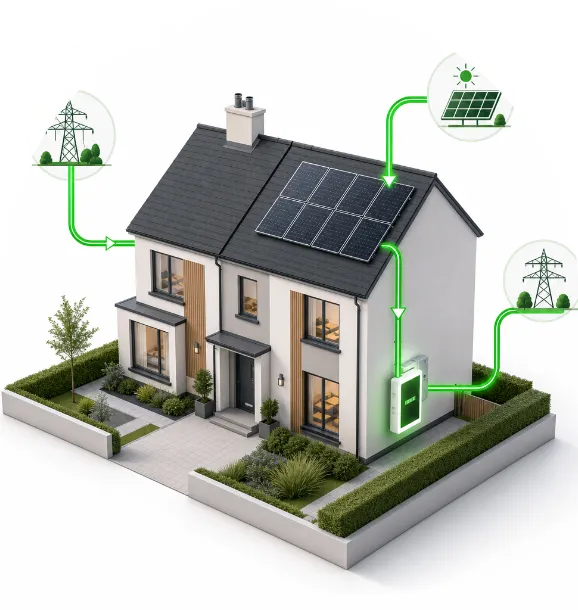

Buy electricity smarter. Store it. Use it. And when the time is right, sell it back.


Quick links
Other
© Battery 1st Energy. 2026. All Rights Reserved.