
Blog
Stay Ahead with Smarter Home Energy Insights
Welcome to the Battery 1st blog, where we share practical insights, smart energy ideas, and clear guidance on battery storage, solar, EV charging, tariffs, and the future of home energy. Whether you're exploring your first battery system, planning future upgrades, or looking for smarter ways to cut electricity costs, our blog is here to help you make better-informed decisions. Dive into our latest posts and stay ahead in a fast-changing energy world.

Savings.
Flexibility.
Optimisation.
Expansion.
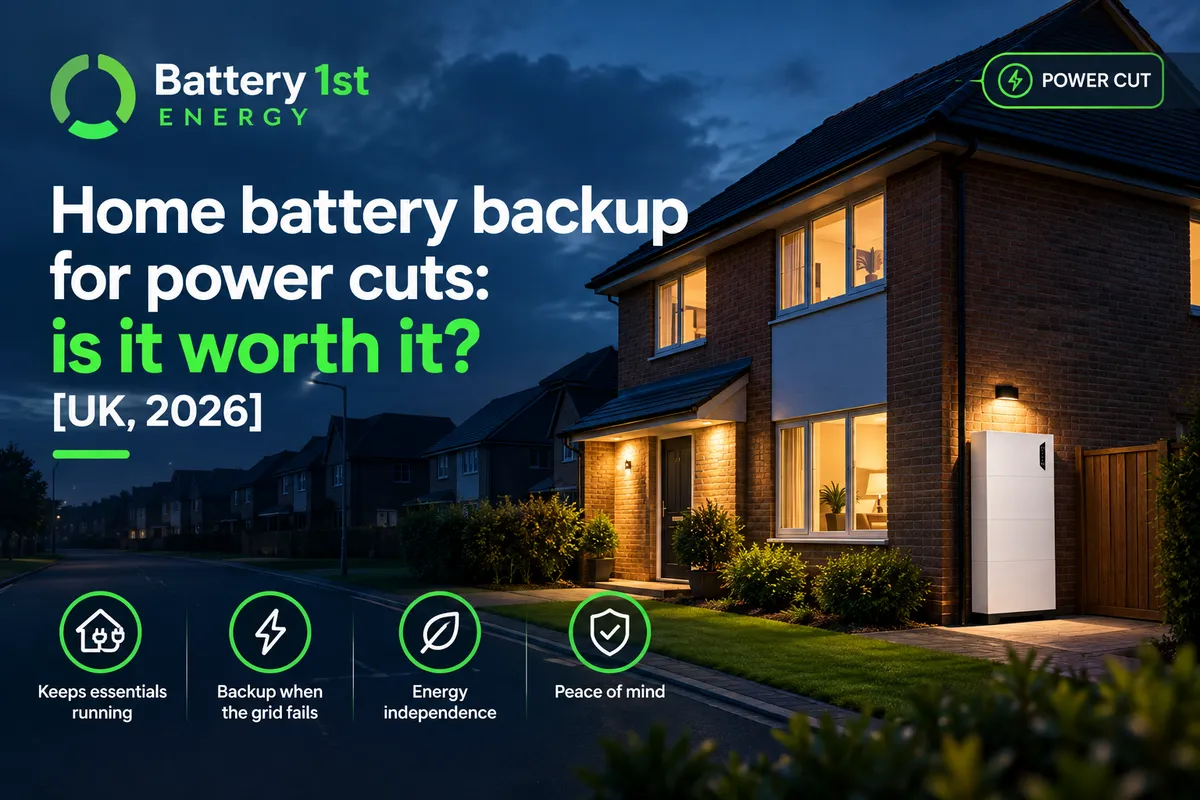
Home battery backup for power cuts: is it worth it? [UK, 2026]
Home battery backup for power cuts: is it worth it? [UK, 2026]
A sudden power cut can quickly become more than an inconvenience. Your lights go off, Wi-Fi stops working, appliances shut down, and essential devices may lose power when you need them most.
This is why many homeowners are asking: Is home battery backup for power cuts UK worth it in 2026?
The answer is that a properly designed home battery backup system can provide reliable stored energy during electricity outages while also helping reduce everyday energy costs. Unlike traditional generators, modern battery systems operate quietly, require less maintenance, and can automatically provide backup power when the grid fails.
In the UK, interest in residential battery storage is increasing as homeowners look for better control over energy costs, greater resilience, and smarter ways to manage electricity usage. Home batteries are also becoming more attractive for households with electric vehicles, heat pumps, and future solar plans. (The Guardian)
Battery 1st Energy helps homeowners install smart battery systems that store cheaper off-peak electricity and intelligently manage energy use. The goal is not only to protect your home during outages but also to create a flexible energy system that saves money every day.
What Is Home Battery Backup for Power Cuts UK?
A home battery backup for power cuts UK is a residential energy storage system designed to keep your home powered when the electricity grid experiences an outage.
Instead of generating electricity like a generator, a battery backup system stores electricity in advance and releases it when required.
A typical home battery system includes:
A lithium-ion battery unit
An inverter to convert stored electricity into usable power
Smart energy management software
Backup connection equipment
The battery can store electricity from:
The electricity grid
Solar panels (if installed)
Other compatible energy sources
When a power cut happens, the system automatically switches to stored energy and supplies electricity to connected circuits.
Why Are UK Homeowners Considering Battery Backup in 2026?
Energy security and electricity costs have become major concerns for many households.
The UK energy system is also changing rapidly, with increased renewable energy generation creating a greater need for flexible energy storage solutions. Battery storage helps balance electricity supply and demand by storing energy when available and releasing it when needed. (Reuters)
Homeowners are considering battery backup because it can provide:
Protection Against Unexpected Power Cuts
Although UK power cuts are generally less frequent than in some countries, outages can still happen due to:
Severe weather
Network issues
Infrastructure problems
Local faults
A battery backup system provides an additional layer of household protection.
Better Control Over Energy Bills
A battery does not only help during emergencies.
Smart batteries can charge when electricity prices are lower, such as during off-peak periods, and use stored energy when prices are higher.
This process helps households reduce unnecessary electricity costs.
Support for Electric Vehicles and Smart Homes
Many UK households are adopting:
Electric vehicles
Heat pumps
Smart appliances
These technologies increase electricity demand. A battery storage system helps manage this additional energy usage more efficiently.
How Does a Home Battery Work During a Power Cut?
Many homeowners wonder what actually happens when the grid goes down.
The process is simple:
Step 1: The Battery Stores Electricity Before an Outage
Before a power cut happens, the battery stores electricity.
This energy can come from:
Lower-cost grid electricity
Solar energy
Other connected sources
Step 2: The System Detects the Power Failure
When the electricity supply stops, the battery system identifies the outage.
A suitable backup setup safely disconnects your home from the grid and activates battery power.
Step 3: Stored Energy Powers Your Home
The battery inverter converts stored energy into electricity that your home appliances can use.
Depending on your battery size, it may power:
Lights
Internet router
Refrigerator
Security systems
Essential appliances
Heating controls
The length of backup depends on:
Battery capacity
Household electricity usage
Number of devices running
Can a Home Battery Work Without Solar Panels?
Yes. A battery backup system can work without solar panels.
Many homeowners believe they need solar before installing a battery, but modern systems can charge directly from the grid.
This is known as battery backup without solar panels.
A battery-first approach allows homeowners to:
Start saving with energy storage immediately
Use cheaper electricity periods
Add solar panels later
Build a future-ready energy system
This approach is especially useful for homeowners who want improved energy control but are not ready for solar installation.
Battery 1st Energy focuses on helping homeowners begin with intelligent battery storage and expand their system as their energy needs change.
What Can a Battery Power During a UK Power Cut?
The amount of backup power available depends on the battery size and your home's energy requirements.
Essential Household Devices
A smaller battery system may support:
LED lighting
Wi-Fi router
Phones and laptops
Refrigerator
Security systems
Larger Household Loads
A larger system may support:
Heating controls
Kitchen appliances
More household circuits
Additional electronics
However, high-energy appliances such as electric showers, large electric heaters, and some heating systems require careful planning because they consume significant power.
A professional assessment helps determine what your battery can realistically support.
Is Home Battery Backup Worth It for UK Homes?
Whether a home battery backup for power cuts UK system is worth it depends on your household requirements.
A battery system may provide strong value if you:
✓ Experience frequent power interruptions
✓ Work from home
✓ Own an electric vehicle
✓ Want lower electricity costs
✓ Plan to install solar later
✓ Want greater energy independence
A battery can provide benefits beyond emergency backup.
It can also help with:
Energy bill reduction
Smart electricity usage
Future renewable energy integration
For many homeowners, the value comes from using the battery every day rather than only during outages.
Benefits of Installing a Smart Home Battery System
1. Automatic Backup During Power Cuts
A smart battery system can provide automatic backup without needing fuel, manual setup, or noise.
This makes it a convenient emergency power solution.
2. Lower Energy Costs
Smart charging allows batteries to store electricity when prices are lower.
Homeowners can then use stored energy during expensive periods.
This is particularly useful with time-of-use electricity tariffs.
3. Quiet and Cleaner Than Traditional Generators
Battery storage operates silently and produces no direct emissions during use.
Unlike fuel generators, there is no need to store petrol or diesel.
4. Future Energy Flexibility
A modern battery system can support future upgrades such as:
Solar panels
EV charging
Heat pumps
Smart home devices
This makes it a long-term energy investment.
How AI Makes Home Battery Backup More Efficient
Modern battery technology uses intelligent software to improve performance.
AI-powered battery optimisation can analyse:
Household electricity patterns
Energy prices
Charging behaviour
Weather conditions
Future demand
The system can automatically decide:
When to charge
When to store energy
When to use stored power
This removes the need for homeowners to manually manage their battery every day.
Battery 1st Energy uses smart optimisation technology to help homeowners maximise savings and improve energy efficiency.
Choosing the Right Battery Backup System for Your Home
Before installing a battery, consider these factors:
Battery Capacity
Capacity determines how much electricity can be stored.
Larger homes or homes with higher energy use may require larger systems.
Backup Requirements
Decide what you want to keep powered during outages.
Some homeowners only need essential backup, while others want broader home coverage.
Future Plans
Think about upcoming changes:
Electric vehicle ownership
Solar installation
Heat pump installation
Choosing a flexible system makes future upgrades easier.
Conclusion: Is Home Battery Backup for Power Cuts UK Worth It?
A home battery backup for power cuts UK system can provide homeowners with greater energy security, lower electricity costs, and more control over how they use power.
While a battery is valuable during outages, its biggest advantage is that it works every day by storing electricity intelligently and improving household energy management.
For UK homeowners planning for rising energy needs, electric vehicles, solar upgrades, or a smarter home, battery storage offers a flexible and future-ready solution.
Battery 1st Energy helps homeowners build intelligent energy systems that combine savings, backup protection, and future flexibility.
Explore your options and discover how a smart battery system could benefit your home:
https://qualify.battery1st.energy/

A better way to think about home energy
Most homeowners have been taught to think about energy in only one direction: buy from the grid and use it.
Battery First changes that.
Your home can become more active. It can buy power more intelligently. It can keep free generation for later. And in the right setup, it can sell energy back when the grid needs support.
That is a fundamentally better energy position than simply being a passive bill payer.
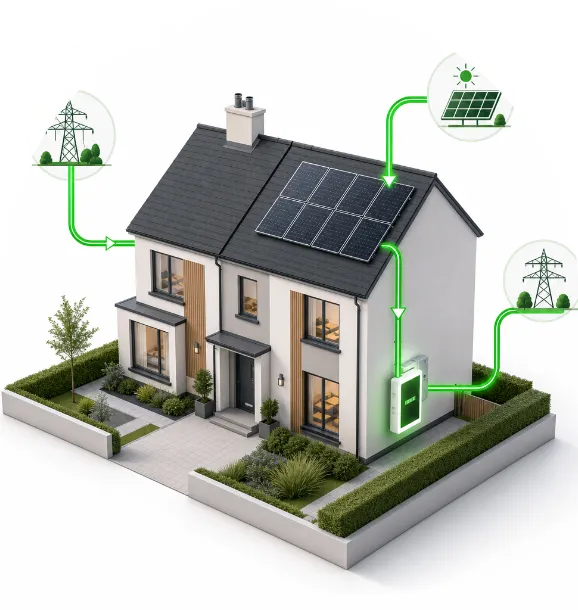

Buy electricity smarter. Store it. Use it. And when the time is right, sell it back.


Quick links
Other
© Battery 1st Energy. 2026. All Rights Reserved.