
Blog
Stay Ahead with Smarter Home Energy Insights
Welcome to the Battery 1st blog, where we share practical insights, smart energy ideas, and clear guidance on battery storage, solar, EV charging, tariffs, and the future of home energy. Whether you're exploring your first battery system, planning future upgrades, or looking for smarter ways to cut electricity costs, our blog is here to help you make better-informed decisions. Dive into our latest posts and stay ahead in a fast-changing energy world.

Savings.
Flexibility.
Optimisation.
Expansion.
How a Home Battery Lowers Energy Bills Without Solar Panels
How a Home Battery Lowers Energy Bills Without Solar Panels
When people think about home batteries, they often imagine them paired with solar panels.
Solar panels generate electricity, batteries store it, and together they create a more efficient home energy system.
But there is an important point many homeowners do not realise:
A home battery does not need solar panels to help reduce energy bills.
A battery can create value by changing the way your home buys and uses electricity.
Instead of purchasing electricity whenever your home needs it, a smart battery allows you to store electricity when prices are lower and use it when prices increase.
This simple change in timing can help households reduce their exposure to expensive electricity periods and gain more control over their energy costs.
As UK energy prices continue to change and more flexible tariffs become available, battery storage without solar is becoming an increasingly attractive option for homeowners.
Can a home battery work without solar panels?
Yes.
A home battery can charge directly from the electricity grid.
This means it does not rely on solar generation to provide benefits.
A battery-only system works by:
Charging when electricity prices are cheaper
Storing that electricity for later use
Supplying power to your home when electricity is more expensive
The battery becomes a tool for managing energy costs rather than simply storing renewable energy.
For many households, the biggest opportunity is not only producing electricity.
It is purchasing electricity at the right time.
Why electricity timing matters more than ever
Traditional energy systems are simple:
The grid provides electricity → your home uses electricity → you receive a bill.
However, electricity prices are becoming more dynamic.
Many UK energy tariffs now offer different prices depending on the time of day.
Typically:
Electricity can be cheaper overnight
Prices can increase during high-demand periods
Smart tariffs can reward flexible energy use
Without storage, most homes have limited ability to take advantage of these price differences.
A battery changes that.
It allows your home to buy electricity when it is cheaper and use it later when costs are higher.
How a battery reduces energy bills without solar
1. Charge during cheaper electricity periods
One of the biggest advantages of a home battery is the ability to charge during low-cost periods.
For example, if your energy tariff offers cheaper overnight electricity, the battery can charge while prices are lower.
The stored energy can then be used during the day or evening when electricity costs more.
This reduces the amount of expensive electricity your home needs to purchase.
2. Reduce peak-rate electricity usage
Many households use significant amounts of electricity during peak periods.
Evening demand can increase because families are:
Cooking
Watching television
Using appliances
Charging devices
Heating their homes
A battery can provide stored electricity during these times.
Instead of buying electricity at higher rates, your home uses energy already stored at a lower cost.
3. Improve energy independence
A battery gives homeowners more control over where and when their electricity comes from.
Without a battery, your home depends entirely on the grid at the moment electricity is needed.
With a battery, your home has an energy reserve.
This can provide:
Greater control over electricity costs
More flexibility with tariffs
Reduced dependence on peak pricing
Better preparation for future energy changes
4. Prepare for future solar installation
A battery-first approach does not prevent you from adding solar later.
In fact, it can create a stronger foundation.
Many homeowners want solar but may not be ready because of:
Roof suitability
Installation timing
Budget considerations
Changing household needs
Installing a battery first allows you to begin improving energy management immediately.
Later, solar panels can be added to provide renewable generation and additional charging opportunities.
Is battery storage worth it without solar panels?
For many homes, it can be.
However, the value depends on individual circumstances.
A battery may be especially beneficial for households that:
Use more electricity in the evening
Have access to cheaper overnight tariffs
Own or plan to buy an electric vehicle
Expect to install a heat pump
Want greater control over energy costs
Have high electricity consumption
A properly sized battery system should be designed around your home's usage patterns.
A larger battery is not always better. The goal is finding the right balance between storage capacity, electricity usage and potential savings.
Battery storage and electric vehicles
Electric vehicles are increasing electricity demand in many homes.
An EV can significantly increase household electricity consumption, especially if charging happens during expensive periods.
A home battery can help by:
Charging during cheaper periods
Supporting EV charging schedules
Reducing pressure on household electricity demand
As homes become more electrified, battery storage becomes increasingly valuable.
Battery storage and future heat pumps
Heat pumps are another technology changing how homes use electricity.
Unlike traditional heating systems, heat pumps rely on electricity to provide heating.
This increases the importance of managing electricity efficiently.
A smart battery can help homeowners prepare for this transition by creating a more flexible energy system.
The battery becomes part of a wider strategy for an all-electric home.
The role of AI in smarter battery savings
Modern battery systems are becoming more intelligent.
AI-powered energy management can analyse:
Household consumption patterns
Electricity prices
Charging opportunities
Future energy demand
Instead of manually deciding when to charge or use stored electricity, smart systems can optimise energy decisions automatically.
This helps homeowners find better savings opportunities over time.
Why Battery First starts with the battery
Many traditional energy conversations begin with solar panels.
Battery First takes a different approach.
The battery is the control layer of the modern home.
It allows homeowners to:
Buy electricity intelligently
Store energy efficiently
Reduce peak costs
Add solar later
Prepare for EVs and heat pumps
The future of home energy is not simply about generating more electricity.
It is about controlling electricity better.
Battery-only vs solar plus battery: what is the difference?
Both options can provide value, but they solve different problems.
Battery-only system
A battery-only system:
Charges from the grid
Takes advantage of cheaper electricity periods
Reduces peak-rate electricity usage
Provides future flexibility
Solar plus battery system
A solar and battery system:
Generates renewable electricity
Stores unused solar energy
Reduces grid dependence
Provides additional savings opportunities
The important point is that a battery does not have to wait for solar.
It can start delivering benefits immediately.
Final thoughts: Can a home battery lower bills without solar?
Yes.
A home battery can lower energy bills without solar panels by allowing your home to use electricity more strategically.
Instead of paying whatever electricity costs at the moment you need it, a battery gives you the ability to buy, store and use energy at smarter times.
As energy prices become more flexible and homes become more electric, battery storage is becoming an important part of future energy planning.
For homeowners who want lower bills, greater control and a pathway towards solar, EVs and smart energy technology, starting with a battery-first approach could be the right move.

A better way to think about home energy
Most homeowners have been taught to think about energy in only one direction: buy from the grid and use it.
Battery First changes that.
Your home can become more active. It can buy power more intelligently. It can keep free generation for later. And in the right setup, it can sell energy back when the grid needs support.
That is a fundamentally better energy position than simply being a passive bill payer.
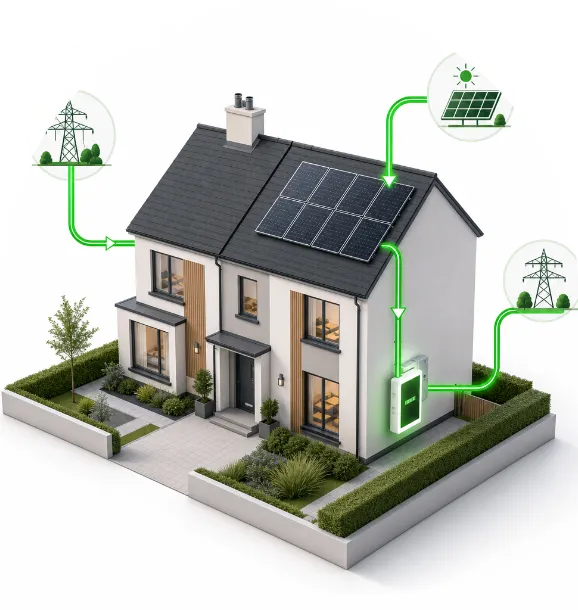

Buy electricity smarter. Store it. Use it. And when the time is right, sell it back.


Quick links
Other
© Battery 1st Energy. 2026. All Rights Reserved.